
No, Earlier Than That.
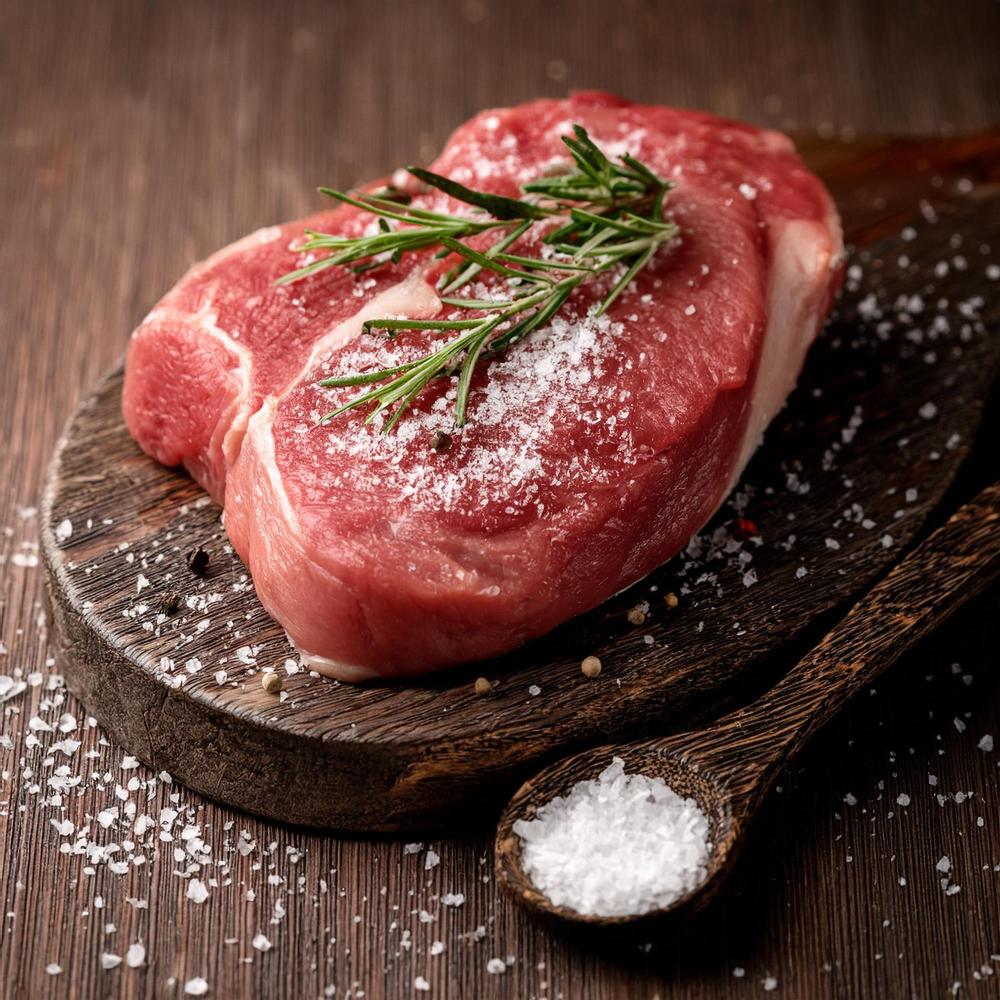
At some point — and I’d like to know exactly when — it became common practice to season meat immediately before cooking it. Right there at the pan. A last-minute sprinkle of salt as the oil heats up, as though salt is a garnish rather than a fundamental part of the cooking process. As though the meat doesn’t deserve better than thirty seconds of contact with the most important seasoning in your kitchen.
It doesn’t. And your steaks, your chicken thighs, your pork chops — they have been suffering in silence for this.

Salting meat early is one of the most impactful, zero-cost upgrades available to any home cook. The science behind it is osmosis, and it works in two stages. In the first twenty minutes after salting, the salt draws moisture to the surface — which is why, if you salt and immediately cook, you get a wet, steaming exterior that can’t brown properly. But if you wait — 40 minutes minimum, overnight ideally — that drawn-out moisture dissolves the salt and is reabsorbed back into the muscle fibres, taking the seasoning with it deep into the meat. The surface dries out. The interior is seasoned all the way through. The Maillard reaction — the browning you’re after — proceeds without interference.
This is not a technique. It is the baseline. Everything else is built on top of it.
The Method :
- Take your meat out of the packaging. Pat it completely dry with paper towels — moisture is the enemy of browning and you want to start dry.
- Season generously with salt on all sides. More than feels comfortable. Salt applied early is partially absorbed; salt applied at the last minute just sits on the surface and tastes aggressively salty. They are not the same thing.
- Place the meat uncovered on a rack or plate in the refrigerator. Uncovered is important — the refrigerator air further dries the surface, which is exactly what you want.
- Leave it for a minimum of 40 minutes. Ideally, several hours. For a thick steak or a whole chicken, overnight is the correct answer.
- Remove from the fridge 30 minutes before cooking to take the chill off. A cold centre in a piece of meat means uneven cooking — the outside overcooks while the inside struggles to temperature.
- Cook as intended. Notice the difference. Acknowledge it. Adjust your habits accordingly.
Why it’s a Yes :
Osmosis is the movement of water across a membrane toward higher salt concentration. Salt on the surface of meat creates higher concentration outside than inside, pulling moisture outward.
Given time, equilibrium is reached — the dissolved brine re-enters the muscle through the same osmotic process, now carrying the salt flavour into the interior.
The surface simultaneously dries, creating ideal conditions for the Maillard reaction. Physics doing your seasoning for you. You just have to get out of the way.
Pro Tip :
For chicken, salting the night before and leaving it uncovered in the fridge does double duty — it seasons the meat deeply and dries the skin to the point where it will crisp in the oven without any additional effort.
This is the single reason rotisserie chickens from good shops have better skin than your roast chicken at home. They were salted early. Dry skin crisps. Wet skin steams. The refrigerator is doing the work overnight while you sleep, which is the best kind of cooking.

Leave a Reply