
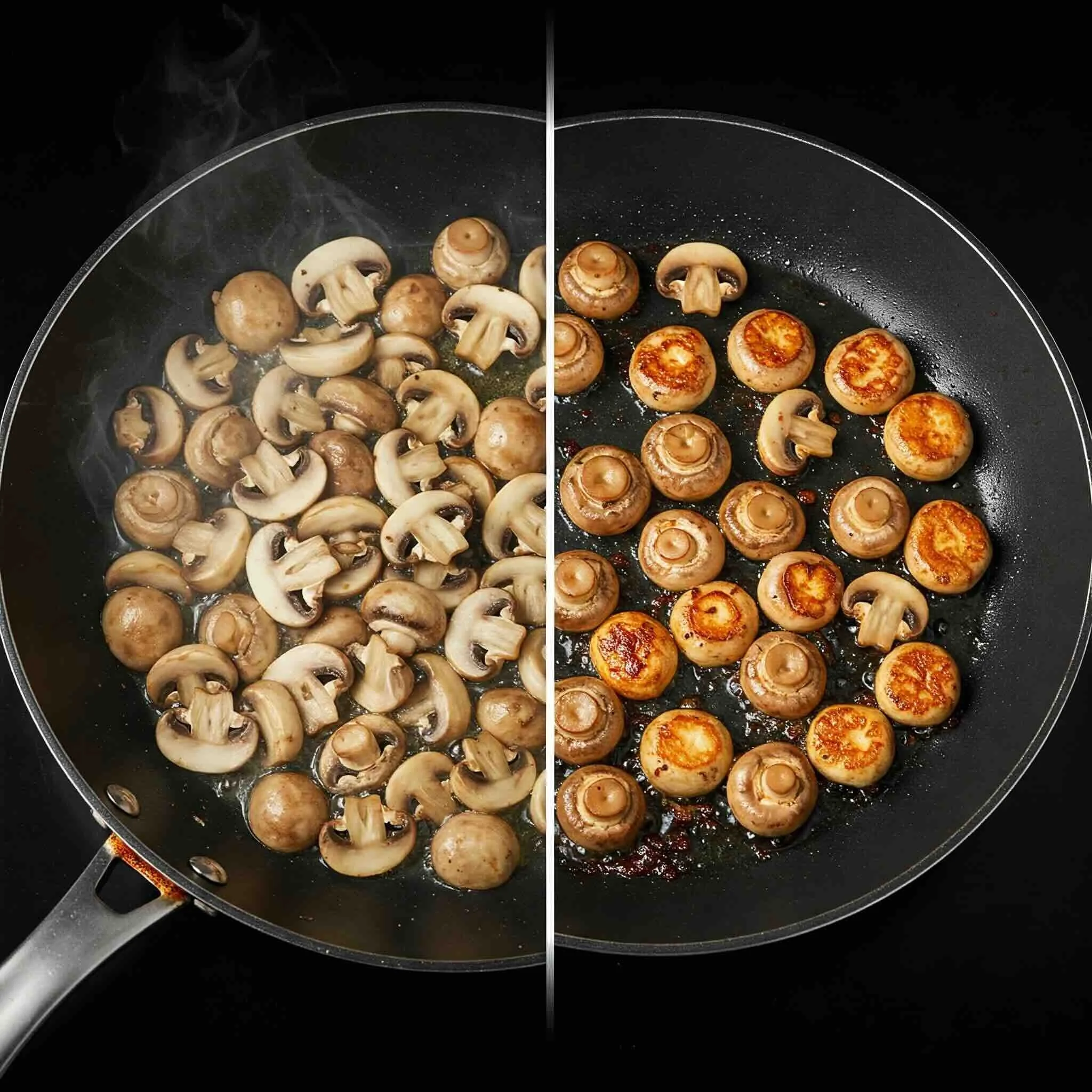
Your Food Is Begging You.
I have watched people do this. I have done this myself, early in my cooking life, before someone with more sense and less patience explained what was actually happening. You have a pan. You have a quantity of food that is technically too large for that pan. And instead of cooking in two batches — which takes an additional four minutes — you pile everything in anyway, because you are in a hurry and because optimism is a persistent human failing.

What follows is not cooking. What follows is steaming. Your food, packed tightly against itself in a pan that cannot maintain its temperature under that load, releases moisture. That moisture has nowhere to go. It hangs above the food as steam, keeping the surface wet, preventing any browning from occurring, producing something pale and soft and vaguely sad when it should have been golden, caramelised, and worth eating.
The pan needs space. The food needs heat. These are not negotiable.
The Method :
- Before you start cooking anything, assess the pan size honestly. The food should sit in a single layer with visible space between pieces. Not touching. Visible space.
- If your ingredients fill the pan completely, you have two options: use a larger pan, or cook in batches. There is no third option that produces good food.
- Heat the pan properly before adding anything. A properly heated pan recovers temperature faster when cold food is added. An underheated pan never recovers.
- Add food in a single layer. Leave it alone. Resist the urge to move it constantly. Let the Maillard reaction happen undisturbed.
- If cooking in batches, keep the first batch warm in a low oven (100°C) while the second batch cooks. Do not cover it — covering traps steam and softens any crust you’ve worked to achieve.
Why it’s a Yes :
Every piece of cold food added to a pan drops the pan’s temperature. A single chicken thigh in a large pan: temperature drops briefly, recovers quickly, browning proceeds. Eight chicken thighs in a small pan: temperature plummets, takes minutes to recover if it recovers at all, and in the meantime every piece is sitting in its own released moisture — steaming rather than searing.
The Maillard reaction requires both high heat and a dry surface. Crowding eliminates both simultaneously. You’ve engineered the worst possible conditions and then wondered why the result is disappointing.
Pro Tip :
This rule applies to vegetables just as much as meat — arguably more so, because vegetables have higher water content and release moisture faster. Roasting broccoli, mushrooms, or courgette in a crowded tray produces a soggy, steamed result that bears no resemblance to the crispy, caramelised edges you were hoping for.
Spread them out. Use two trays if necessary. High heat, single layer, space between pieces. The extra washing up is worth it. Everything tastes better when it’s actually cooked.
Leave a Reply