
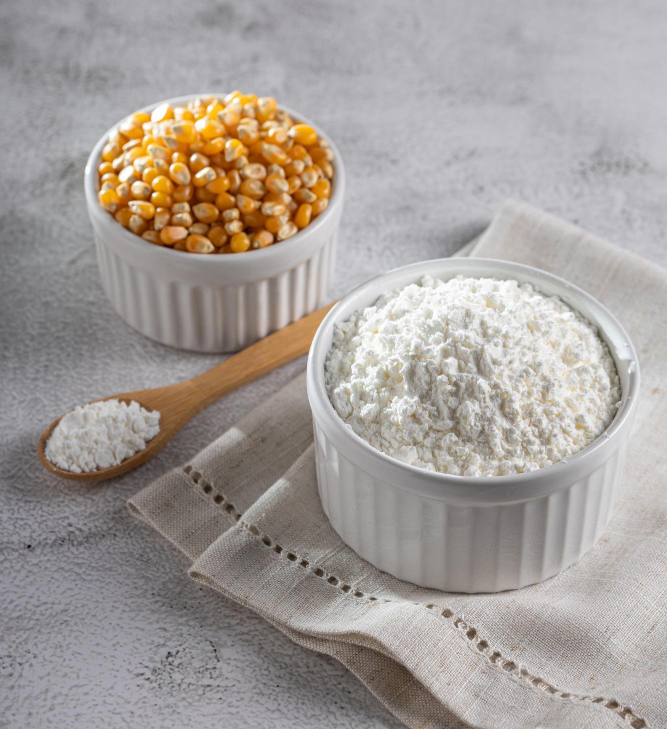
Most cooks eventually notice the same quiet transformation in the pan. A thin liquid suddenly becomes silky and cohesive after a spoonful of starch. A soup gains body. A gravy stops running across the plate and begins to cling.
This change feels almost magical, but it follows a simple piece of culinary physics. Starch thickens sauces because its molecules respond to heat and water in predictable ways. Once you understand that behavior, thickening stops being a trick and becomes a controllable tool.
What Starch Is Actually Doing
Starch exists inside many everyday ingredients — flour, rice, potatoes, corn, and tapioca. These starches are made of tiny granules built from long chains of glucose molecules.
When these granules are mixed with liquid and heated, they begin to absorb water. As the temperature rises, the granules swell and loosen their internal structure. Eventually they release some of those starch chains into the surrounding liquid.
At that point, the sauce begins to thicken.
The released starch molecules move through the liquid and lightly tangle with each other. They slow the movement of water, creating a sauce that feels smoother and heavier. The more starch chains present, the thicker the liquid becomes.
This process is called gelatinization, though cooks rarely need the word to understand the result.
Why Heat Matters
Heat is what activates starch.
If starch is added to cold liquid and never heated enough, it will simply sit there. The granules remain tight and compact, and the sauce stays thin.
But once the liquid approaches simmering temperature, the granules begin to expand rapidly. Within moments, the liquid visibly thickens.
This is why many sauces change texture suddenly rather than gradually. The thickening only begins once the temperature crosses that threshold.
Gentle simmering then finishes the process, allowing the starch to fully hydrate and smooth out the sauce.
Why Lumps Form
Lumps appear when starch granules hydrate unevenly.
If dry flour or starch hits hot liquid directly, the outer layer absorbs water immediately and forms a sticky shell. That shell traps dry starch inside, creating the familiar little balls that resist dissolving.
The solution is simple: hydrate starch before it hits high heat.
This is why cooks often mix starch with a small amount of cold liquid first. The mixture disperses the granules so they hydrate evenly once heated.
Another approach is fat. When flour is cooked in butter or oil to form a roux, each starch granule becomes coated with fat. The fat separates the particles, allowing them to disperse smoothly once liquid is added.
Different cuisines solve the same problem with different systems.
Different Starches, Different Textures
Not all starch behaves the same way. Each one creates a slightly different sauce texture.
Flour produces a soft, opaque thickness. This is why it appears in gravies, béchamel, and stews. It thickens gently and adds a subtle body rather than sharp viscosity.
Cornstarch creates a clearer, more glossy texture. The thickening power is stronger and faster, which is why it appears in many stir-fry sauces.
Potato starch and tapioca starch produce an even silkier texture. They thicken quickly and create a slightly elastic mouthfeel often found in East Asian soups and sauces.
None of these are “better.” They simply produce different textures.
Understanding the differences lets cooks choose the result they want rather than following a rule.
Controlling Thickness Without Guesswork
Once you understand starch behavior, adjusting a sauce becomes easier.
Thickness depends on three main factors: the amount of starch, the amount of liquid, and the heat applied.
More starch increases viscosity. More liquid loosens the sauce. Longer simmering allows the starch to hydrate fully and smooth the texture.
If a sauce becomes too thick, a splash of liquid returns it to balance. If it remains too thin, a small additional starch mixture can strengthen the structure.
The key is adding slowly and observing the texture as it develops.
Sauces reveal their thickness clearly once they begin to simmer.
When Starch Stops Working
There are moments when starch behaves differently.
Acidic ingredients such as vinegar or tomatoes can weaken starch structures slightly. Extremely long cooking can also break down the thickening effect, causing sauces to thin again.
This is why starch thickening is often added near the end of cooking rather than at the beginning.
At the same time, sauces thickened with flour-based roux tend to hold their texture longer during extended simmering.
Each system has its strengths.
Leave a Reply