
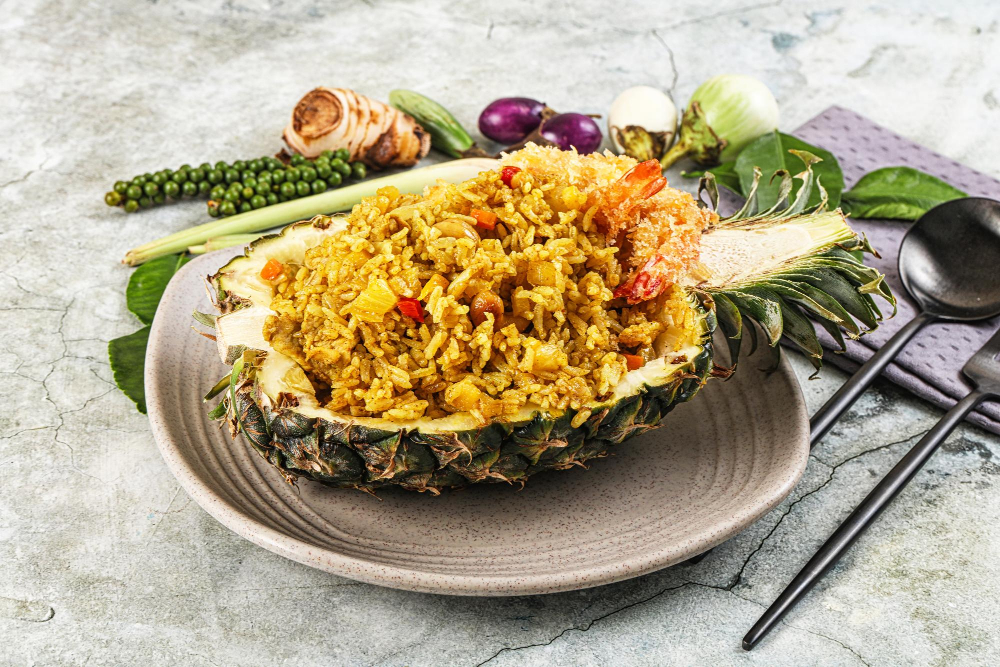
A Thai-style balance of sweet fruit, savory rice, and toasted cashews.
Few dishes demonstrate the harmony of contrasting flavors as clearly as pineapple fried rice. Sweet pineapple, savory rice, roasted nuts, and aromatic seasonings come together in a dish that feels both comforting and vibrant.
Rather than relying on heavy sauces, the character of pineapple fried rice comes from quick heat, light seasoning, and ingredients that each contribute texture — soft rice, juicy fruit, crisp vegetables, and buttery cashews.
In many Thai kitchens, fried rice is not treated as a strict formula. It is a flexible way to transform leftover rice into something lively and aromatic. Pineapple simply adds brightness — a gentle sweetness that balances the savory depth of soy sauce and the toasted richness of nuts.
Ingredients :
- 2 cups cooked jasmine rice (preferably day-old)
- 1 cup fresh pineapple chunks
- 2 tablespoons cooking oil
- 2 cloves garlic, finely chopped
- 1 small shallot or onion, diced
- ½ cup mixed vegetables (carrot, peas, or bell pepper)
- 2 tablespoons soy sauce or light seasoning sauce
- 1 teaspoon fish sauce (optional, for depth)
- ½ teaspoon sugar (optional, depending on pineapple sweetness)
- ½ cup roasted cashews
- 1 egg (optional)
- 2 green onions, sliced
- Fresh cilantro or lime wedges for serving
Cooking Steps :
- Warm the pan.
Heat a wok or large pan over medium-high heat until lightly hot. Add the oil and allow it to spread across the surface. - Cook the aromatics.
Add the garlic and shallot. Stir quickly until fragrant but not browned. - Add vegetables and optional egg.
Toss in the vegetables and stir briefly. If using egg, push the vegetables aside and scramble the egg lightly before mixing it into the pan. - Introduce the rice.
Add the cooked rice, breaking apart any clumps with the spatula. Stir gently so the grains separate and begin to warm through. - Season and balance.
Add soy sauce, fish sauce (if using), and a small pinch of sugar if the pineapple is not very sweet. Stir so the seasoning coats the rice evenly. - Fold in pineapple and cashews.
Add the pineapple chunks and roasted cashews. Stir just long enough to warm them without softening the fruit too much. - Finish with fresh herbs.
Add sliced green onions and give the rice one final toss. Taste and adjust seasoning if needed. - Serve immediately.
Transfer to a bowl or plate and garnish with cilantro or a squeeze of lime for brightness.
Extra Notes :
Use day-old rice when possible
Rice that has rested overnight becomes slightly drier, allowing the grains to fry separately instead of clumping.
Balance sweetness and salt
Pineapple varies in sweetness. If the fruit is very ripe, reduce sugar or soy sauce slightly to maintain balance.
Cashew texture matters
Roasted cashews add both flavor and crunch. If using raw cashews, toast them briefly in the pan before cooking the dish.
Vegetable flexibility
Carrots, bell peppers, peas, corn, or scallions all work well. The goal is to add color and light crunch rather than bulk.
Protein variations
Shrimp, chicken, tofu, or leftover roast meats can be added after the aromatics step for a more substantial meal.
Flavor Logic :
Pineapple fried rice works because it layers contrast rather than intensity.
The rice provides a neutral base that absorbs seasoning. Aromatics like garlic and shallot release fragrance in hot oil, creating a savory foundation. Soy sauce deepens the flavor while keeping the dish light.
Pineapple introduces a gentle acidity and sweetness that lifts the rice, preventing the dish from feeling heavy. Cashews contribute roasted richness and texture, creating a balance between soft, crisp, and juicy elements.
Quick high heat allows the ingredients to warm without losing their individual character — vegetables stay bright, pineapple remains juicy, and rice stays separate.
Fried rice is less about precise measurements and more about understanding how ingredients behave in heat. Once cooks learn how rice absorbs flavor, how aromatics release fragrance, and how sweetness balances salt, the dish becomes endlessly adaptable.
When that understanding develops, recipes begin to feel less like instructions — and more like quiet guidance in the kitchen.
Leave a Reply